

Events
Productivity Project events bring together researchers, policymakers, employers, educators, and community leaders to explore Canada’s human capital future.
Talent Reimagined
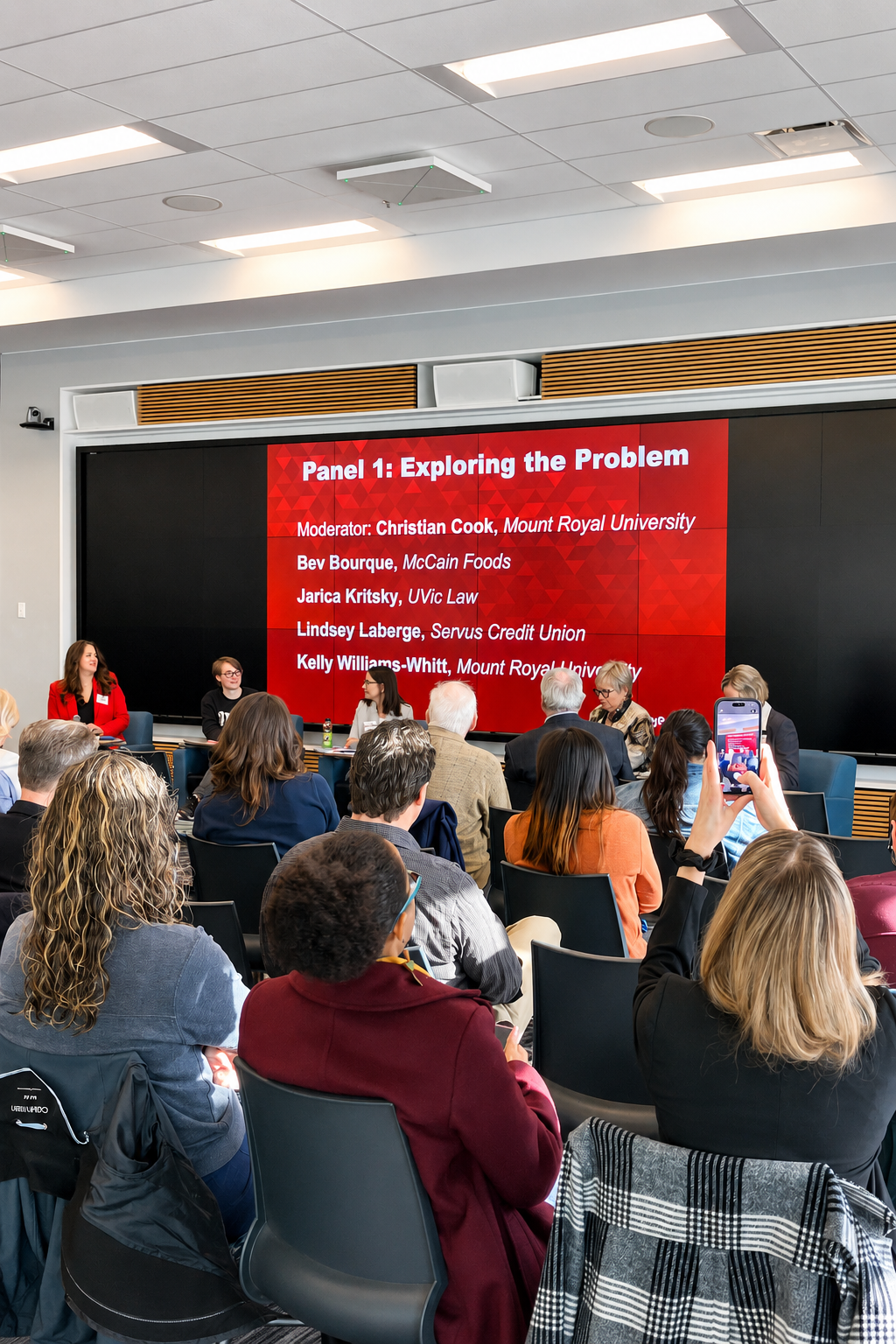
Talent Reimagined was a two-day event held at Mount Royal University on November 3 and 4, 2025, bringing together Alberta’s leading thinkers, leaders, and innovators to explore the forces reshaping the talent marketplace.
The event examined what Alberta’s future of work could look like and how organizations, workers, and communities could prepare. It was grounded in a central challenge: Canada’s productivity crisis threatens wages, competitiveness, and long-term prosperity. At the time, Canada’s productivity lagged the United States by 28% and ranked only 18th among OECD countries.
Human capital — the knowledge, skills, and capabilities of people — was positioned as a critical part of the solution. With 63% of Canadians completing postsecondary education, 22% higher than the OECD average, the potential was clear. The challenge was how to better translate that potential into productivity, opportunity, and shared prosperity.
The Future of Entry-Level Work
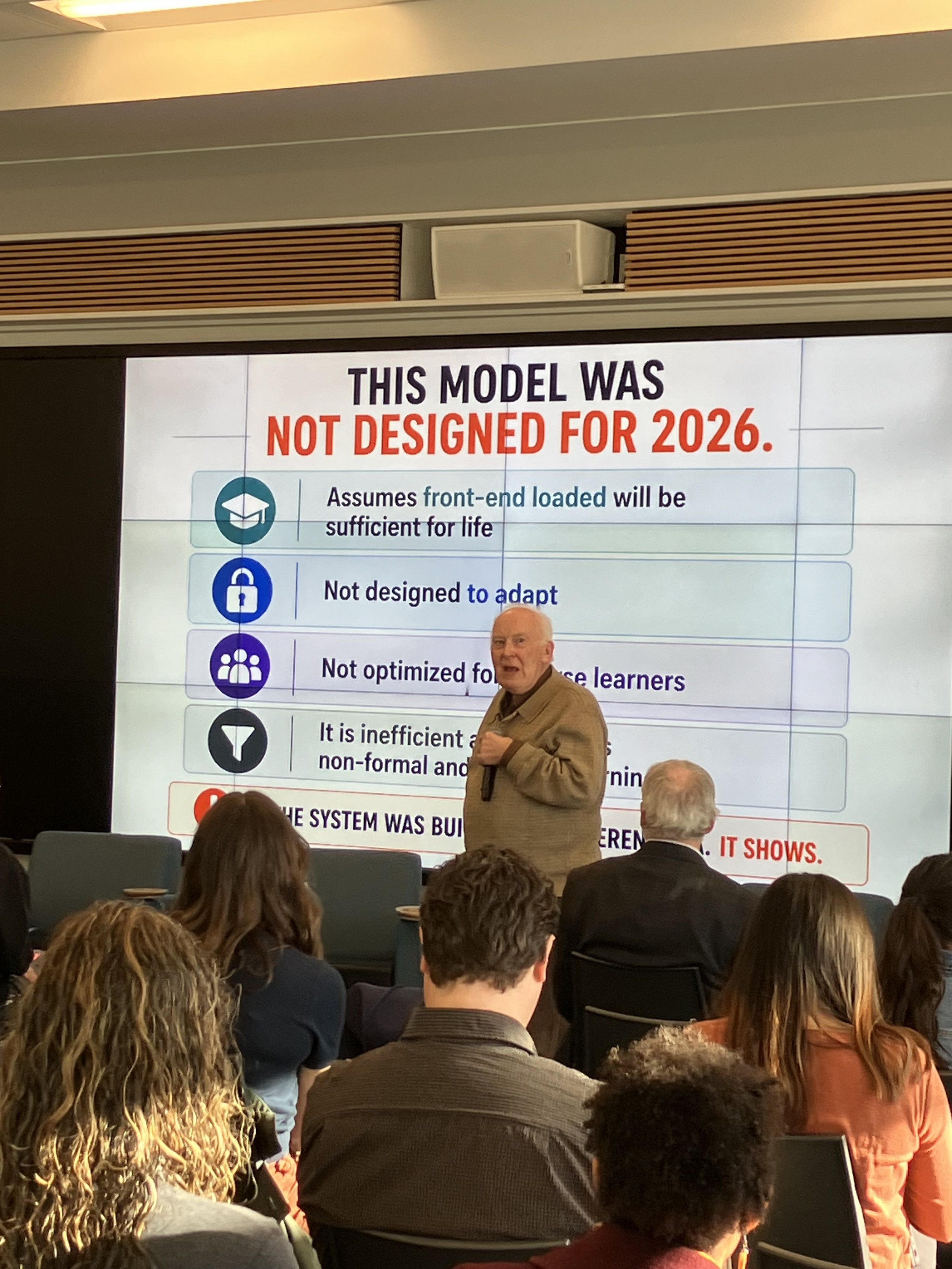
The Future of Entry-Level Jobs was an interactive workshop held at Mount Royal University on April 29, bringing together employers, educators, students, alumni, and policy partners to examine one of Canada’s most urgent labour-market transitions: the changing role of entry-level work.
The workshop explored what happens when traditional entry-level pathways begin to thin or disappear. It was grounded in a central challenge: Canada’s productivity crisis is being felt acutely at the transition between learning and work. Automation and artificial intelligence are reshaping early-career roles, entry-level postings are declining, and youth unemployment remains significantly higher than other age groups.
Entry-level jobs have historically helped people demonstrate skills, build networks, develop career identity, and translate learning into workplace performance. As these pathways weaken, employers, educators, and policymakers need new ways to connect people to opportunity. The workshop positioned stronger entry pathways and skill-recognition systems as essential to rebuilding talent pipelines, supporting career mobility, and helping people adapt to changing economic conditions.
Previous Events



Policymakers
Evidence and policy pathways for improving productivity, workforce development, and learning systems.
Employers
Insights on talent, entry-level work, skills, recognition, and workforce capability.
Educators
Research on open learning, adaptive capability, credentials, and lifelong learning systems.
Media & Event Organizers
Commentary, interviews, briefings, and speaker requests.