
Productivity is About Prosperity.
Productivity is one of the most important ideas in Canada’s economic future, but it is often misunderstood.
It is not about asking people to work longer hours, move faster, or do more with less. Productivity is about how effectively a country turns its people, ideas, tools, investments, and institutions into value.
When productivity grows, wages can rise, organizations can invest, public services become easier to sustain, and communities become more resilient. When productivity stalls, the effects are felt broadly: slower wage growth, weaker competitiveness, lower investment, fewer opportunities, and growing pressure on public systems.
Canada’s productivity challenge is therefore not only an economic issue. It is a people issue.

Canada has a Productivity Problem.
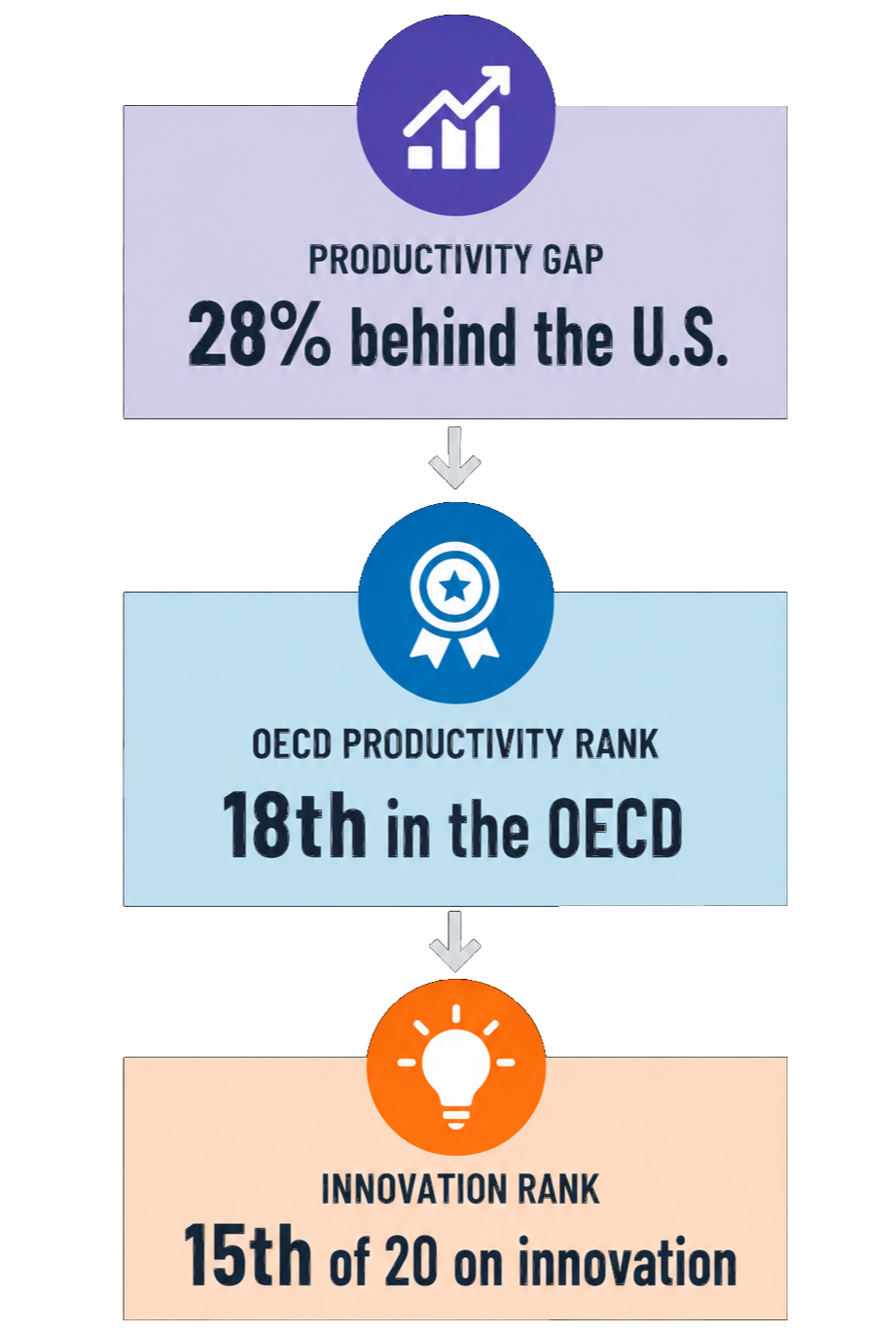
Canada once kept pace with the world’s most productive economies. Today, it does not.
Canada’s labour productivity now lags significantly behind the United States and trails many other advanced economies. At the same time, Canada performs weakly on key innovation measures, suggesting that the country is not turning its knowledge, talent, and investments into economic value as effectively as it could.
This matters because productivity shapes the long-term standard of living. It affects what workers earn, how businesses compete, how governments fund services, and how communities respond to change.
A low-productivity economy can still be busy. People can still work hard. Organizations can still hire, train, and invest. But if the systems connecting learning, work, innovation, and value creation are misaligned, effort does not translate into prosperity.

The Missing Link is Human Capital.
Productivity is usually discussed in terms of three drivers: capital investment, the business environment, and human capital.
Capital investment matters because workers need the right tools, infrastructure, machinery, and technology. The business environment matters because regulation, competition, institutions, and markets shape how organizations operate and grow.
But human capital is the multiplier.
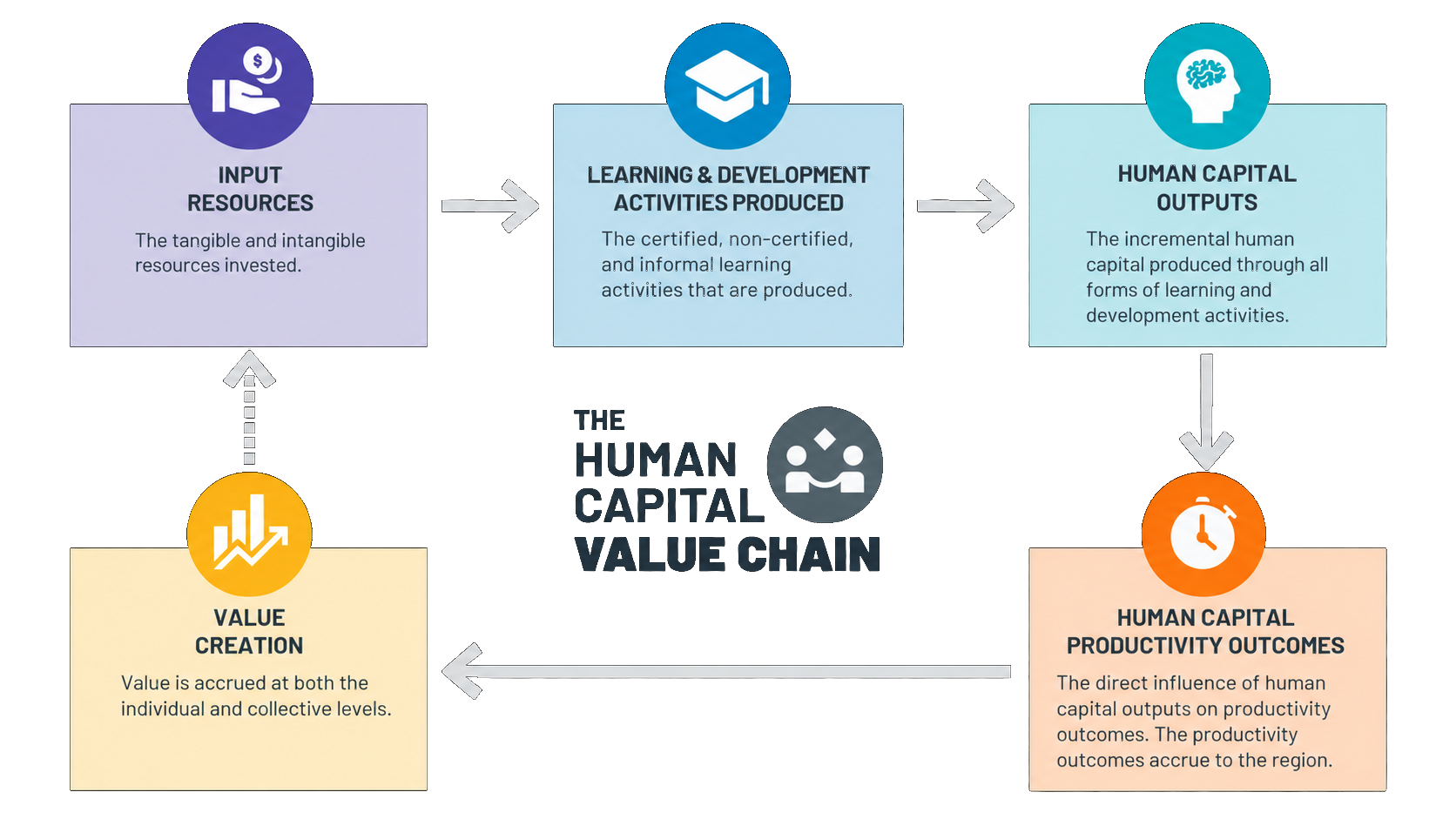
Human capital includes the knowledge, skills, capabilities, judgment, adaptability, and relationships that people bring to work, organizations, and communities. It determines whether technology is adopted well, whether capital is used effectively, whether organizations innovate, and whether people can adapt as jobs change.
In a knowledge-driven economy, Canada’s competitive advantage increasingly depends on how well it develops, recognizes, mobilizes, and renews human capital.
Canada’s education advantage is not enough
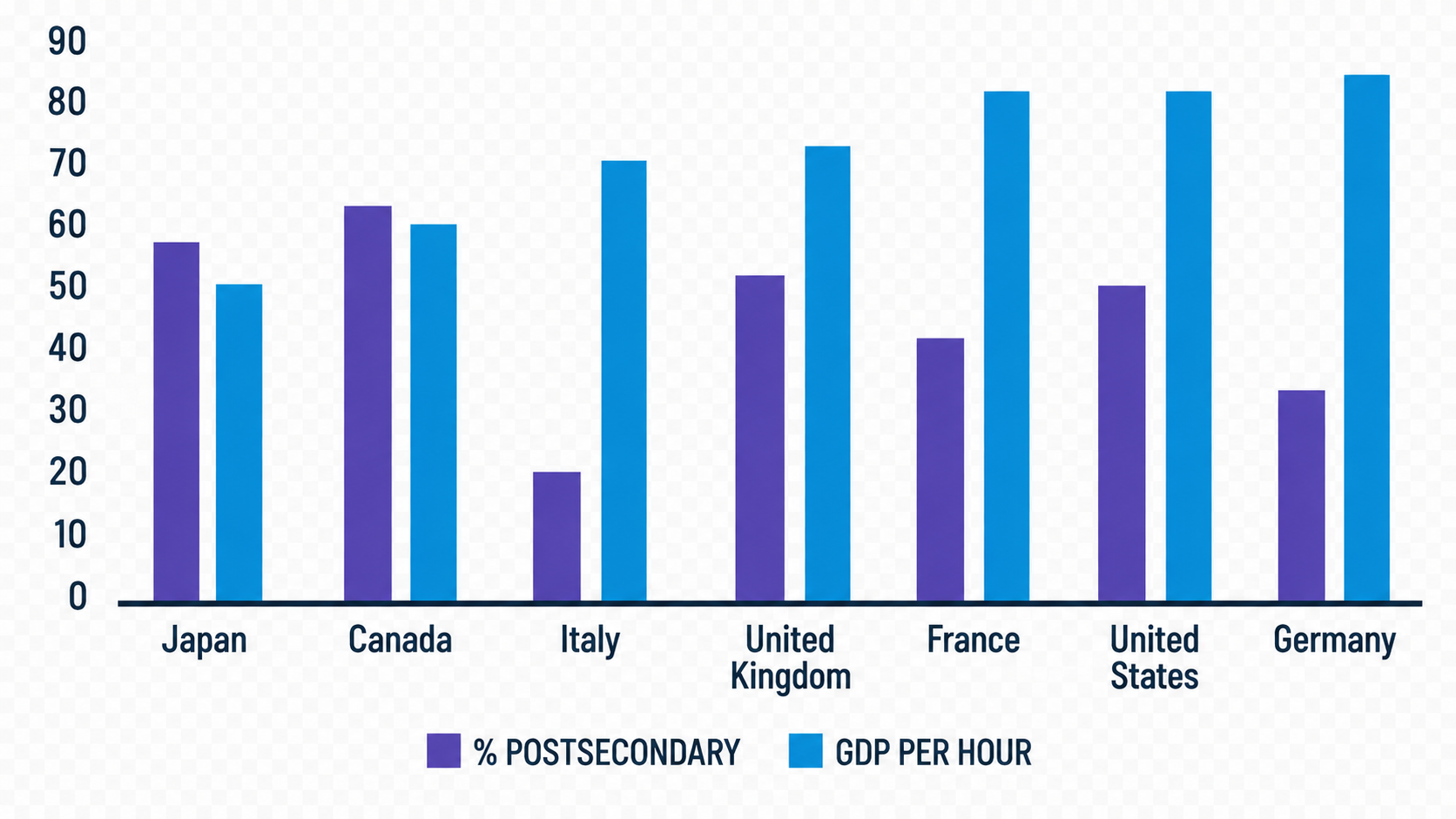
Canada has one of the most educated workforces in the world. That should be a major advantage. But high educational attainment has not translated into equally strong productivity performance.
This is the paradox at the centre of Canada’s human capital challenge.
The issue is not simply whether people are educated. The deeper question is whether people are developing the capabilities the economy needs, whether those capabilities are recognized, and whether they can be mobilized effectively in workplaces, sectors, and regions.
Canada does not only need more learning. It needs better alignment between learning, work, capability, recognition, and economic value.
Canada’s Education Advantage is not Enough.
Canada has one of the most educated workforces in the world. That should be a major advantage. But high educational attainment has not translated into equally strong productivity performance.
This is the paradox at the centre of Canada’s human capital challenge.
The issue is not simply whether people are educated. The deeper question is whether people are developing the capabilities the economy needs, whether those capabilities are recognized, and whether they can be mobilized effectively in workplaces, sectors, and regions.
Canada does not only need more learning. It needs better alignment between learning, work, capability, recognition, and economic value.
Productivity is created through a system
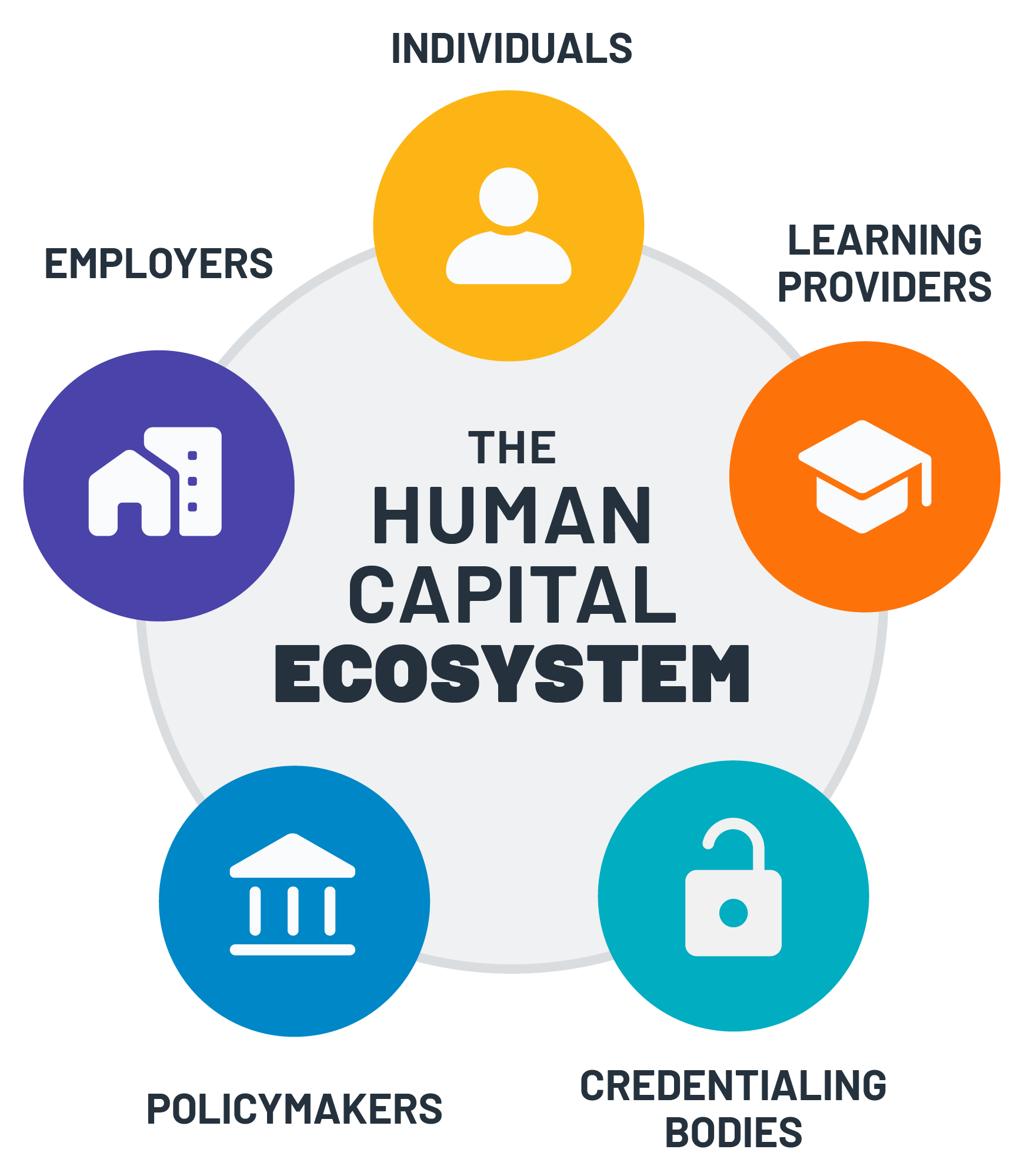
Human capital is not developed by a single institution or policy lever. It is created through a system.
Individuals develop capabilities through formal education, workplace learning, non-certified learning, informal learning, and lived experience. Learning providers create pathways for knowledge and skill development. Credentialing bodies assess and recognize capability. Employers hire, develop, and deploy people. Policymakers shape the incentives, rules, funding, and infrastructure that influence the whole system.
When these actors work in isolation, the result is fragmentation. Learning does not always connect to labour-market demand. Employers struggle to verify capability. People have difficulty translating what they know into opportunity. Regions miss the full value of their human capital.
When these actors are better aligned, human capital becomes a source of productivity growth.

What Needs to Change.
Canada’s productivity challenge cannot be solved by one sector alone.
It requires a coordinated approach to the full human capital system: how people learn, how capabilities are assessed, how employers recognize talent, how regions anticipate labour-market change, and how policy enables more flexible and responsive pathways.
This is the central work of The Productivity Project.
We examine how Canada can better develop, recognize, mobilize, and renew human capital so that people, organizations, and communities can generate more value in a changing economy.
Productivity matters because prosperity depends on people — and on the systems that help people contribute fully.
Start With Evidence
The Productivity Project’s research explores the relationship between human capital and productivity across learning systems, labour markets, hiring, open learning, capability development, and workforce adaptation.
Begin with Productivity and People: Exploring Human Capital and Productivity, the foundational report in Series 1.
A cross-sector initiative focused on Canada’s productivity future.