

Browse by Audience
Find the reports, briefs, and discussion papers most relevant to your role in Canada’s productivity and human-capital conversation.
Policymakers
For policymakers, the Productivity Project provides evidence, frameworks, and policy options to strengthen Canada’s human capital systems. These six reports are especially relevant to public leaders working on productivity, workforce development, skills, open learning, recognition systems, postsecondary policy, economic development, and regional labour-market resilience.
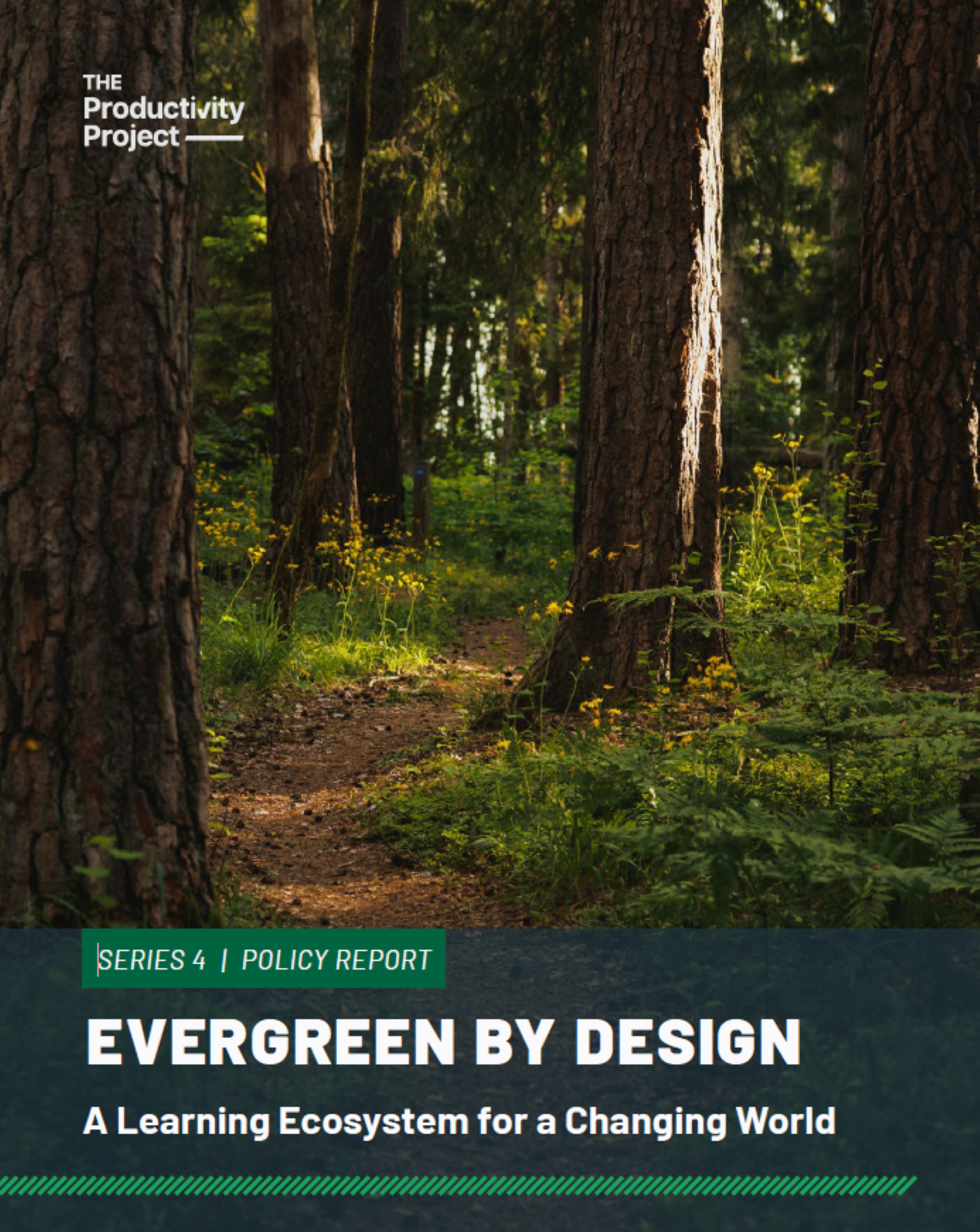
Evergreen by Design introduces the Evergreen Model, an architecture for understanding how different forms of human capability retain, lose, renew, and demonstrate value as labour markets change.
Reframes talent development as a human capital supply chain that connects learners, educators, employers, credentials, and labour-market demand.

Applies the open learning architecture to Alberta and imagines how the province could build a lifelong learning system by 2036.
Explains why the decline of entry-level work is an early warning sign for Canada’s ability to turn learning into opportunity.

Uses future stories to make the open learning architecture concrete, showing how learners, employers, and providers could experience change.
Explains Canada’s productivity challenge and why human capital — people’s skills, capabilities, learning, and experience — must be part of the solution.
Employers & Business Associations
For employers, chambers, sector associations, and business leaders, the Productivity Project examines how talent pipelines, hiring systems, entry-level work, workplace learning, skills recognition, and human-capital renewal shape productivity.
Explains Canada’s productivity challenge and why human capital — people’s skills, capabilities, learning, and experience — must be part of the solution.

Identifies the major forces reshaping work, skills, and regional labour markets, and why Canada needs stronger systems for workforce adaptation.

Explains why hiring is a risk-management problem and how better signals of capability can improve employer confidence and opportunity.
Explains why some skills lose value quickly, some remain useful over time, and others regain value as conditions change.

This study explores the impact of remote and hybrid work on developing early career workers and the broader implications to the labour market.
Explains why some skills lose value quickly, some remain useful over time, and others regain value as conditions change.
Learning Providers
For postsecondary institutions, workforce-development organizations, learning providers, credentialing bodies, and training partners, the Productivity Project examines how learning systems can better support capability development, career mobility, recognition, lifelong learning, and labour-market alignment.
Explains Canada’s productivity challenge and why human capital — people’s skills, capabilities, learning, and experience — must be part of the solution.
Identifies the major forces reshaping work, skills, and regional labour markets, and why Canada needs stronger systems for workforce adaptation.
Maps the wider learning ecosystem and shows how certified, non-certified, informal, and workplace learning can better support productivity.
Open road stretching into the distance with trees on both sides, under a clear sky, with text overlay reading 'Path to Open Learning: A Policy Framework for Enabling Incumbents and Empowering New Entrants' and the logo 'The Productivity Project' in the top left corner.
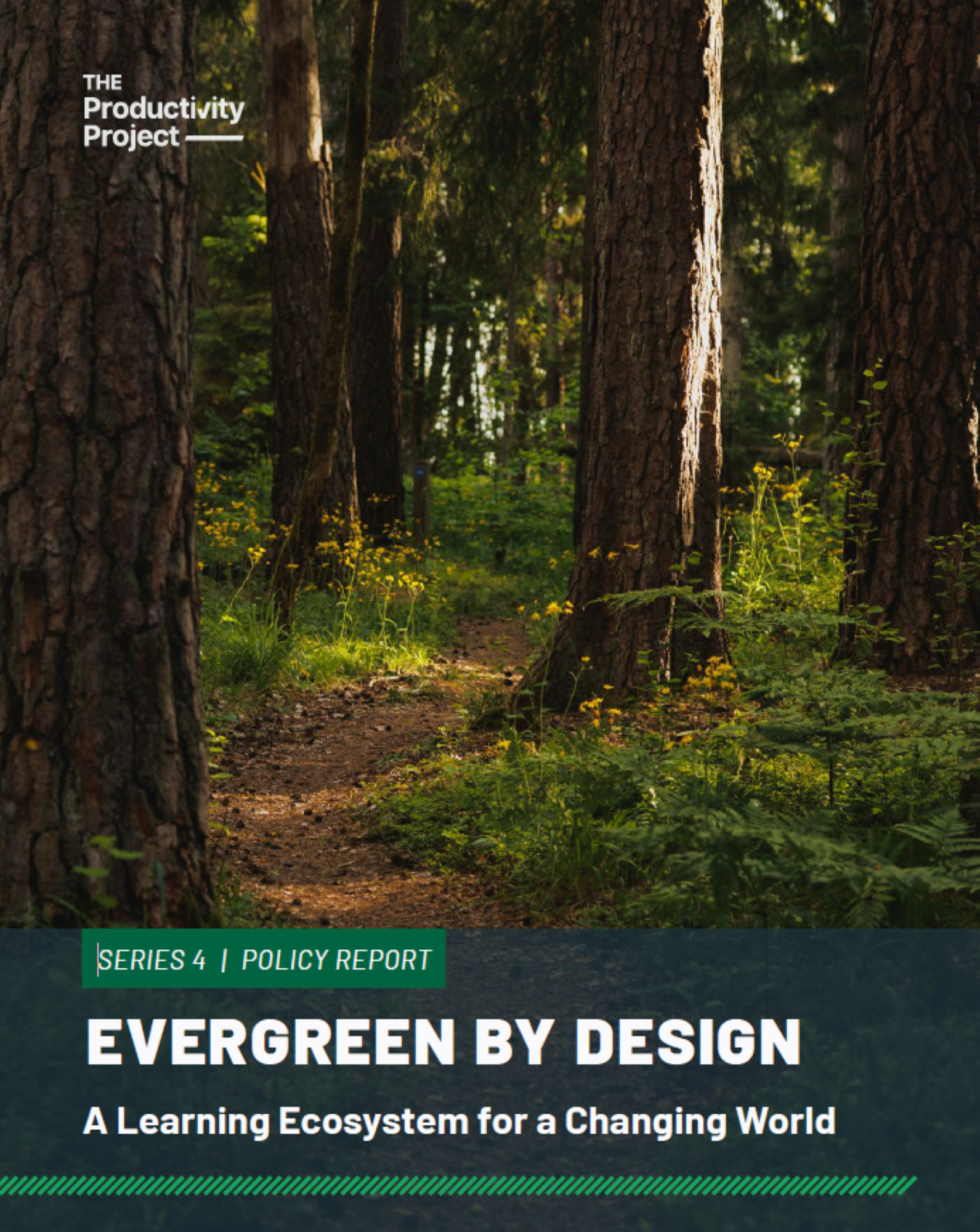
Evergreen by Design introduces the Evergreen Model, an architecture for understanding how different forms of human capability retain, lose, renew, and demonstrate value as labour markets change.
Researchers
For researchers, scholars, graduate students, policy analysts, and applied research partners, the Productivity Project offers conceptual frameworks, research agendas, system models, policy analysis, and applied evidence on productivity, human capital, learning, work, recognition, and regional systems.
Identifies the major forces reshaping work, skills, and regional labour markets, and why Canada needs stronger systems for workforce adaptation.
Reframes talent development as a human capital supply chain that connects learners, educators, employers, credentials, and labour-market demand.
Maps the wider learning ecosystem and shows how certified, non-certified, informal, and workplace learning can better support productivity.
Outlines policy tools for opening learning systems, improving recognition, and helping people build and demonstrate capabilities across their careers.
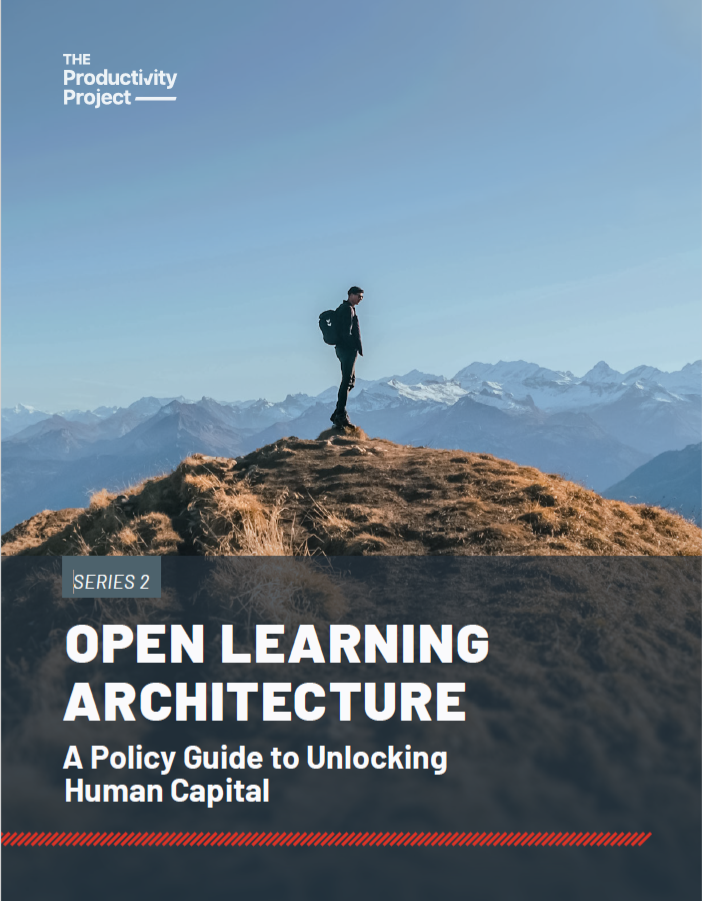
Presents the full open learning architecture for building a more flexible, learner-centred, competency-based human capital system.
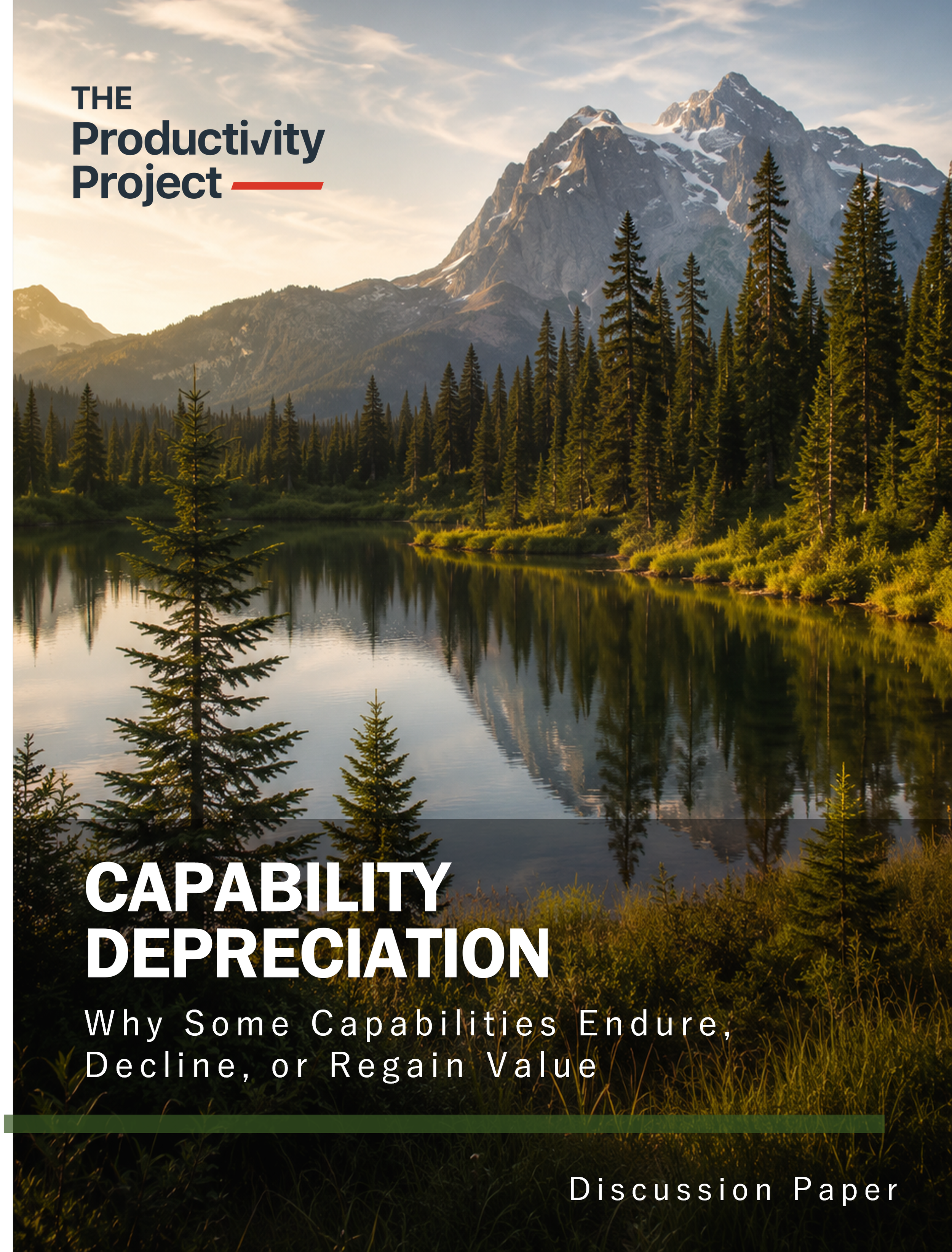
Explains why some skills lose value quickly, some remain useful over time, and others regain value as conditions change.
Media and Public Awareness
For journalists, commentators, event organizers, and members of the public, the Productivity Project provides accessible analysis of Canada’s productivity challenge and the role of people, learning, work, skills, and recognition systems in shaping long-term prosperity.
Explains Canada’s productivity challenge and why human capital — people’s skills, capabilities, learning, and experience — must be part of the solution.
Identifies the major forces reshaping work, skills, and regional labour markets, and why Canada needs stronger systems for workforce adaptation.
Maps the wider learning ecosystem and shows how certified, non-certified, informal, and workplace learning can better support productivity.

Applies the open learning architecture to Alberta and imagines how the province could build a lifelong learning system by 2036.
Uses future stories to make the open learning architecture concrete, showing how learners, employers, and providers could experience change.
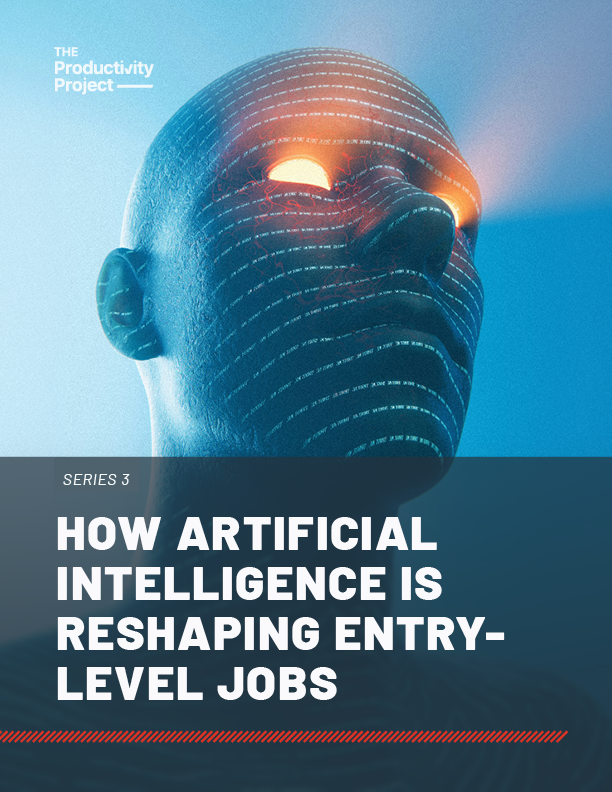
Shows how AI is changing the junior tasks that once helped new workers build skills, confidence, networks, and experience.
Not Sure Where to Start?
The Productivity Project’s research is intentionally interconnected. A report may be relevant to more than one audience, focus area, or policy challenge. If you are looking for a tailored starting point, use the Research Library pathways or contact the Project for a briefing.